This project was created with the support of our patrons at Patreon. Join now to support and to continue Project L being free for everybody, and get even more content for yourself!
There are over 1,000 exclusive posts, including photos, videos and even an
active Discord community for latex enthusiasts & the models.

Thank you.
—
Never let them know your next move. And I bet you didn’t see this one coming; botanical information in the form of audiovisual presentation, wrapped in latex!
Admittedly, this might not be as much of a surprise, if you are on our Patreon and have seen the sneak peeks and the uncut video already – so if you are, would you be so kind to act as surprised for this unexpected combination of themes? Thank you, greatly appreciated.
Anyhow, let’s move on from this badly-hidden shill of an advertisement and tell the story as it goes.
Botanical information! About lupines!
Did you know that lupines, while very pretty, are an invasive species in the Finnish flora?
Did you also know that you don’t actually need latex to go pick them up, but that it’s a wonderful excuse to wear a latex catsuit to avoid ticks?
You don’t need the gloves either, but – again – it’s a lovely excuse to wear them. As shown below.
But did you also know that you can actually get money – yes, literal money – from the Finnish government to pick lupines?
Originally lupines were brought to Europe (and Finland) in the 1800s as a decorative flower. The flower quickly spread from private gardens to basically everywhere, as the plain harebells and dandelions could not survive in the same growing area as lupines.
Lupines form strong and deep roots and they spread their seeds quickly after maturing and it steals nitrogen from the air and stores it into the ground, making it difficult for native plants to thrive. They also spread their leaves widely over the ground, preventing for competing plants to grow.
It’s a perennial flower, which means that it keeps coming back year after year, even after you cut them down.
The best way to get rid of them is to dig up their roots and dispose of the bodies– I mean corps– no, sorry, plants. All of them. Including flowers.
Just throw them in the compost, for example, but be aware that if you’re using the produced soil for planting other things, it might include lupine seeds.
The monetary incentive provided by the government is actually arranged by a gamified app called CrowdSorsa (a play on the word crowdsourcing and sorsa, Finnish for mallard), where you can select your challenge, learn to identify the offending plants and to capture before and after pictures.
It’s not like you’re making money worth living off of, but it’s nice pocket change in the current western world with economy that’s pretty much worst it has been in ages. There’s budgets varying from few hundreds to thousands of euros in total, split to all plant-cutters who have participated in the task.
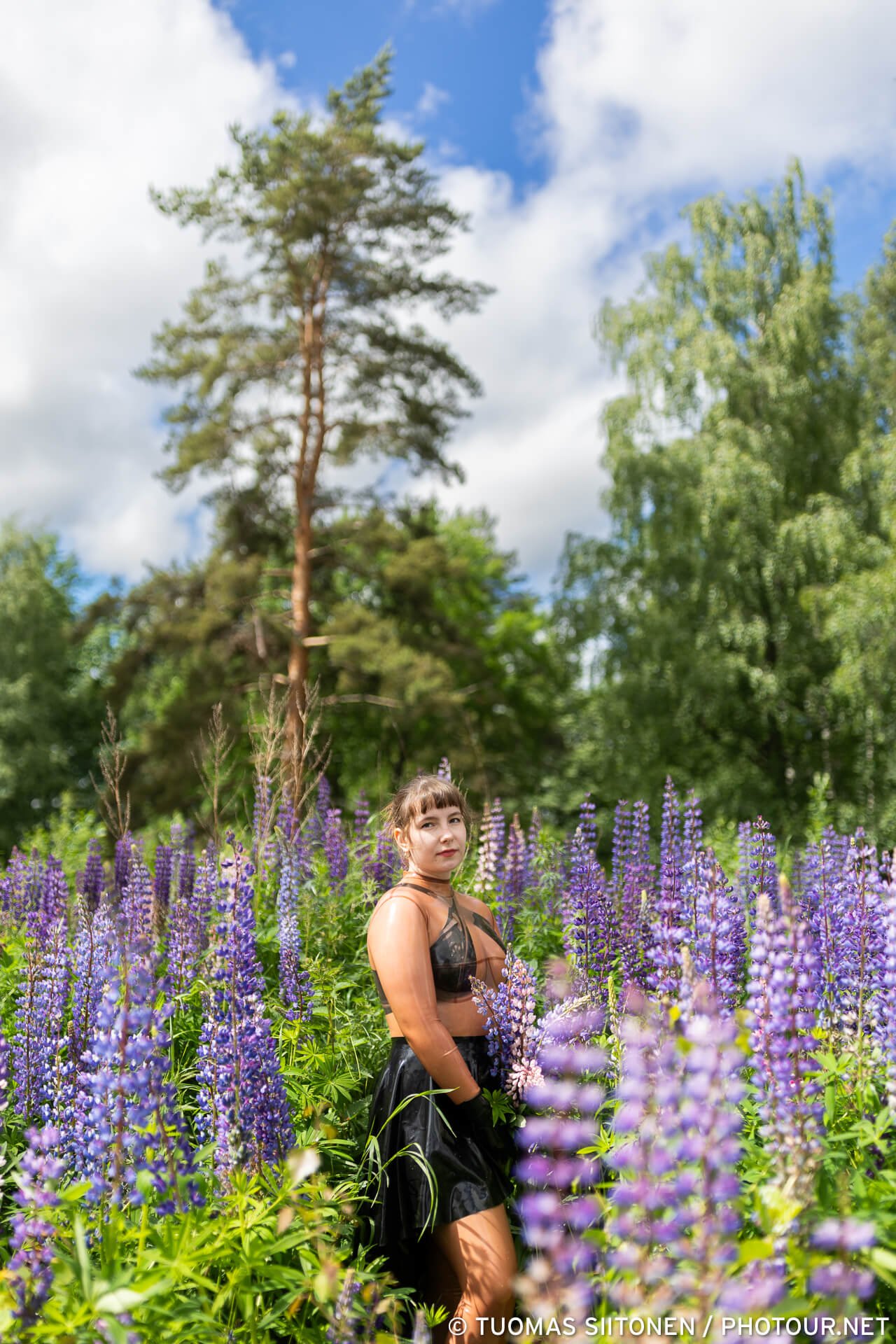
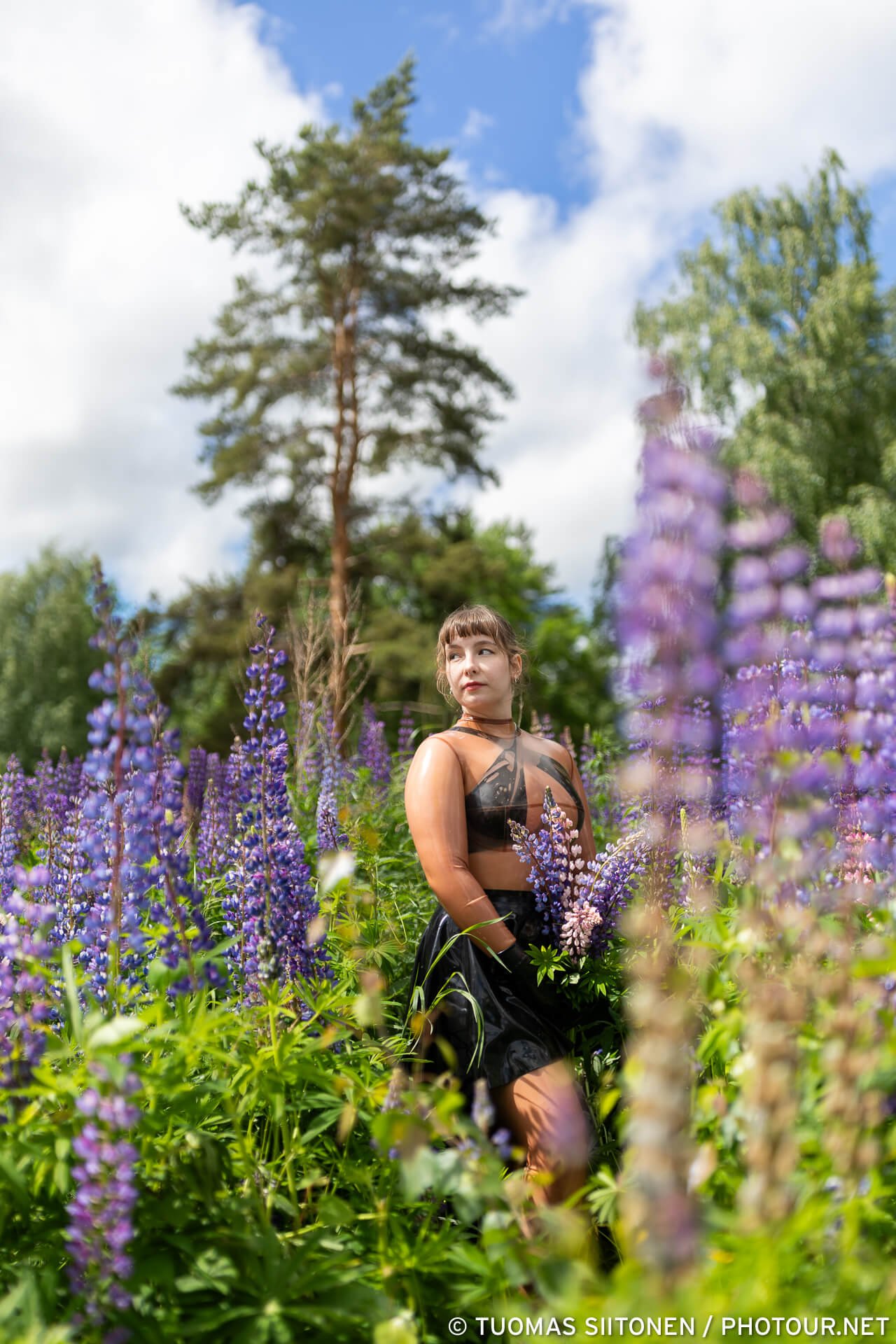
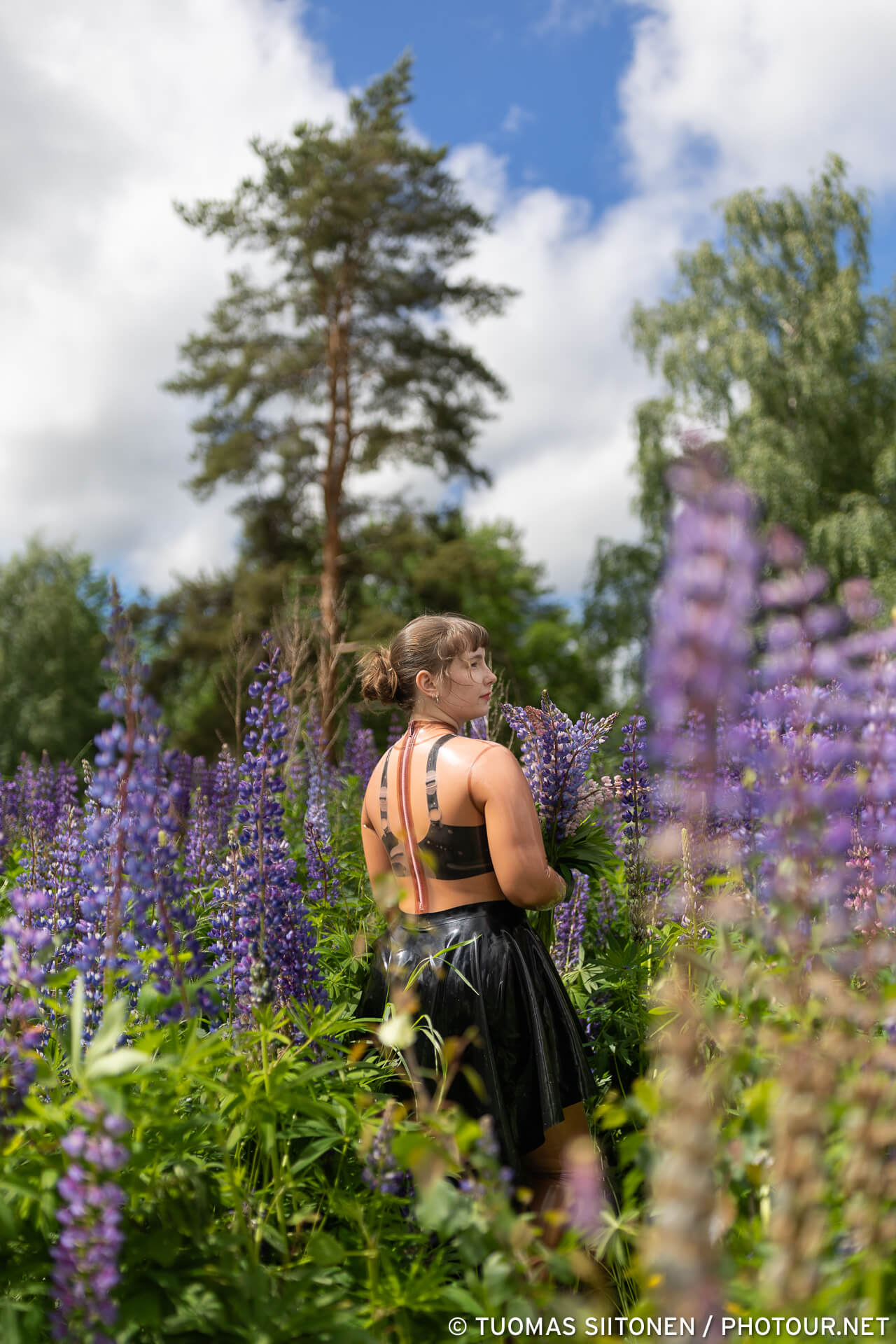
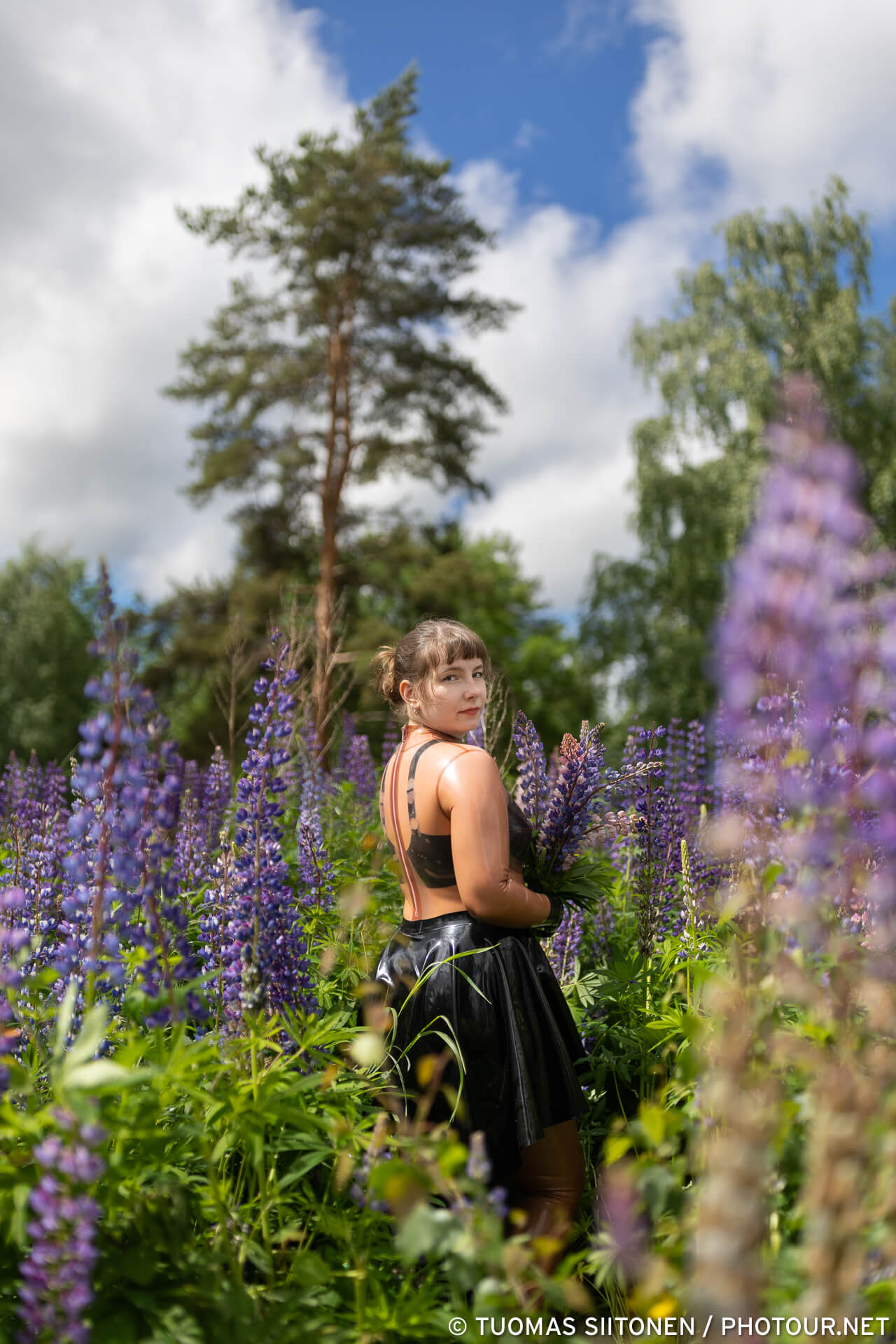
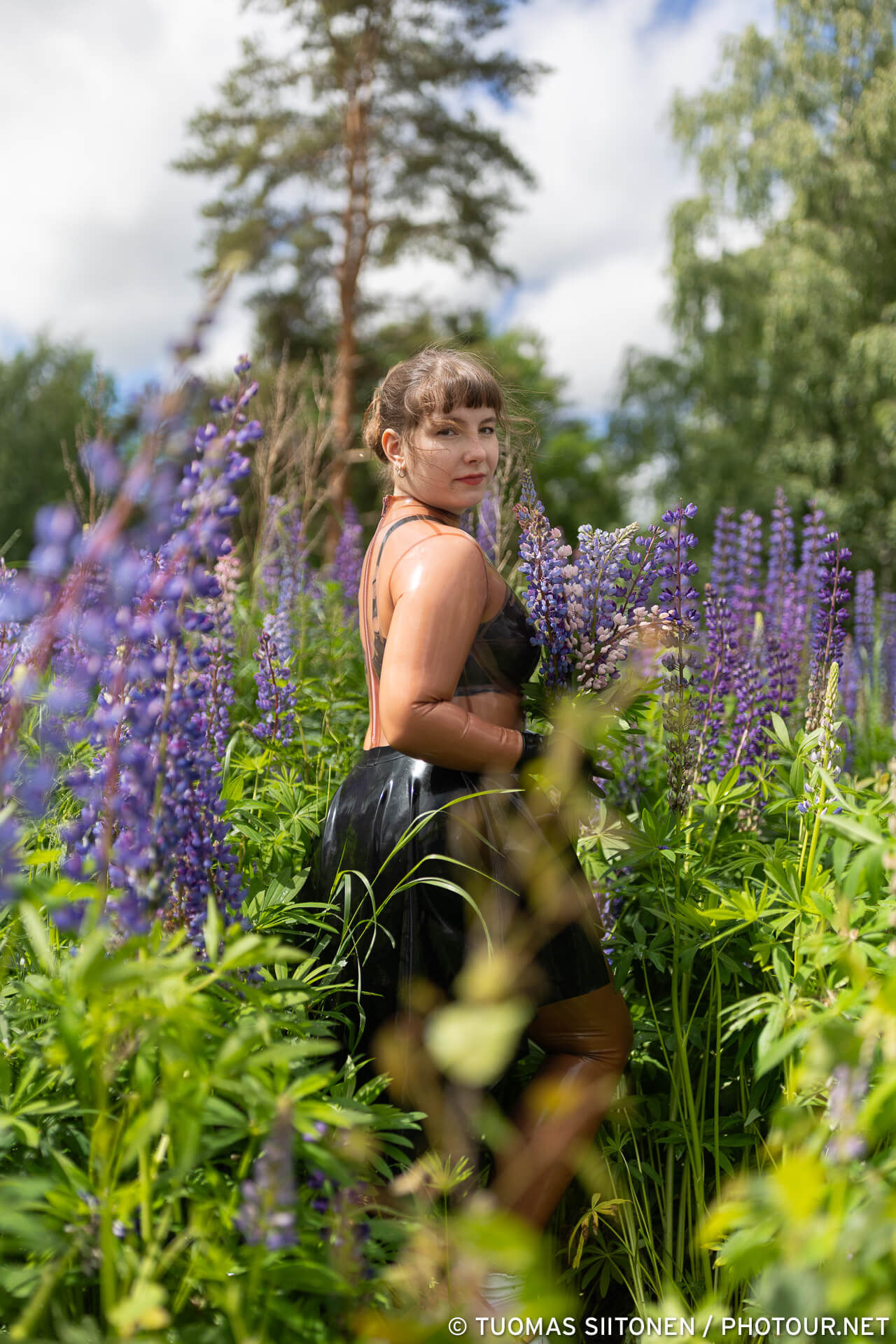
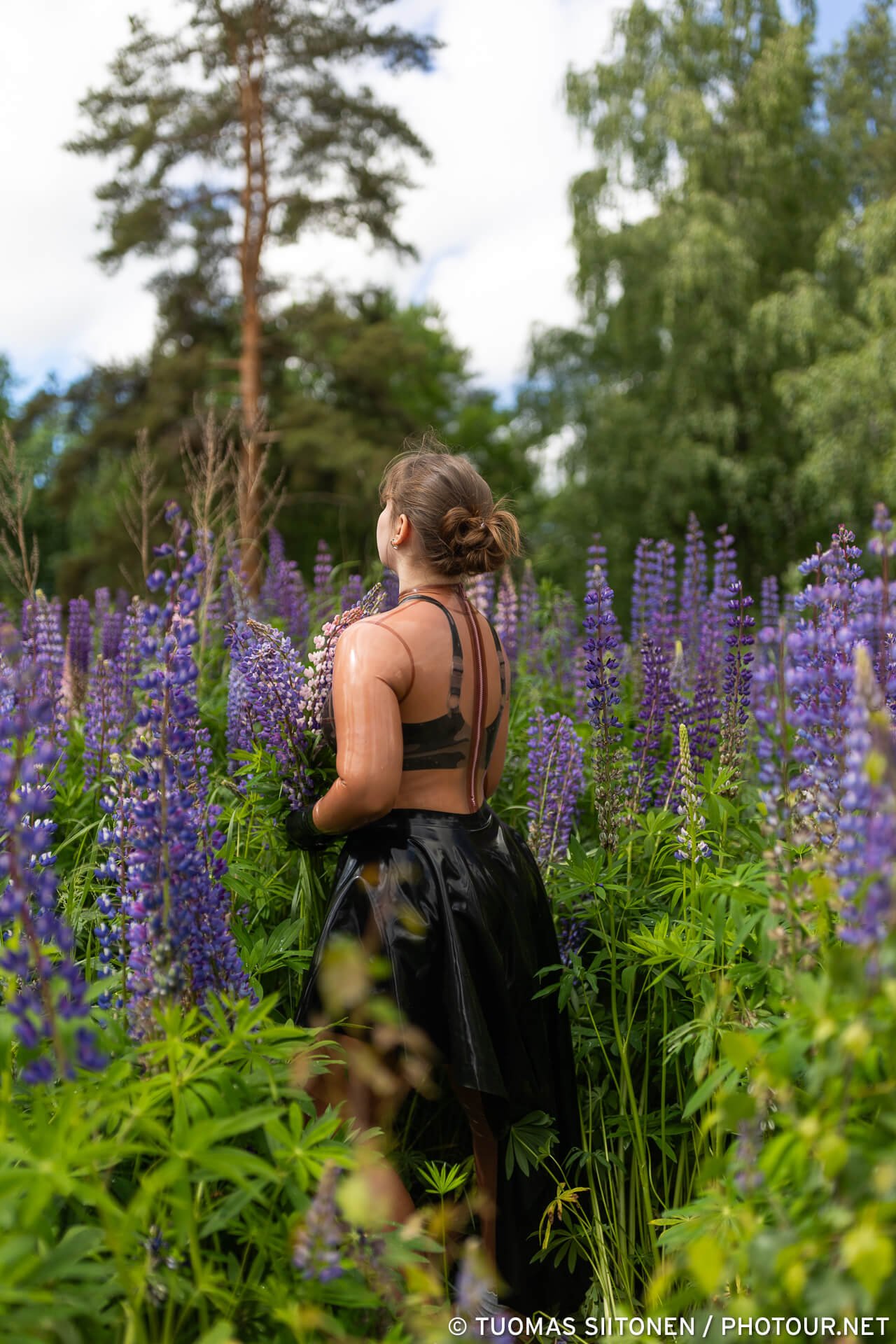
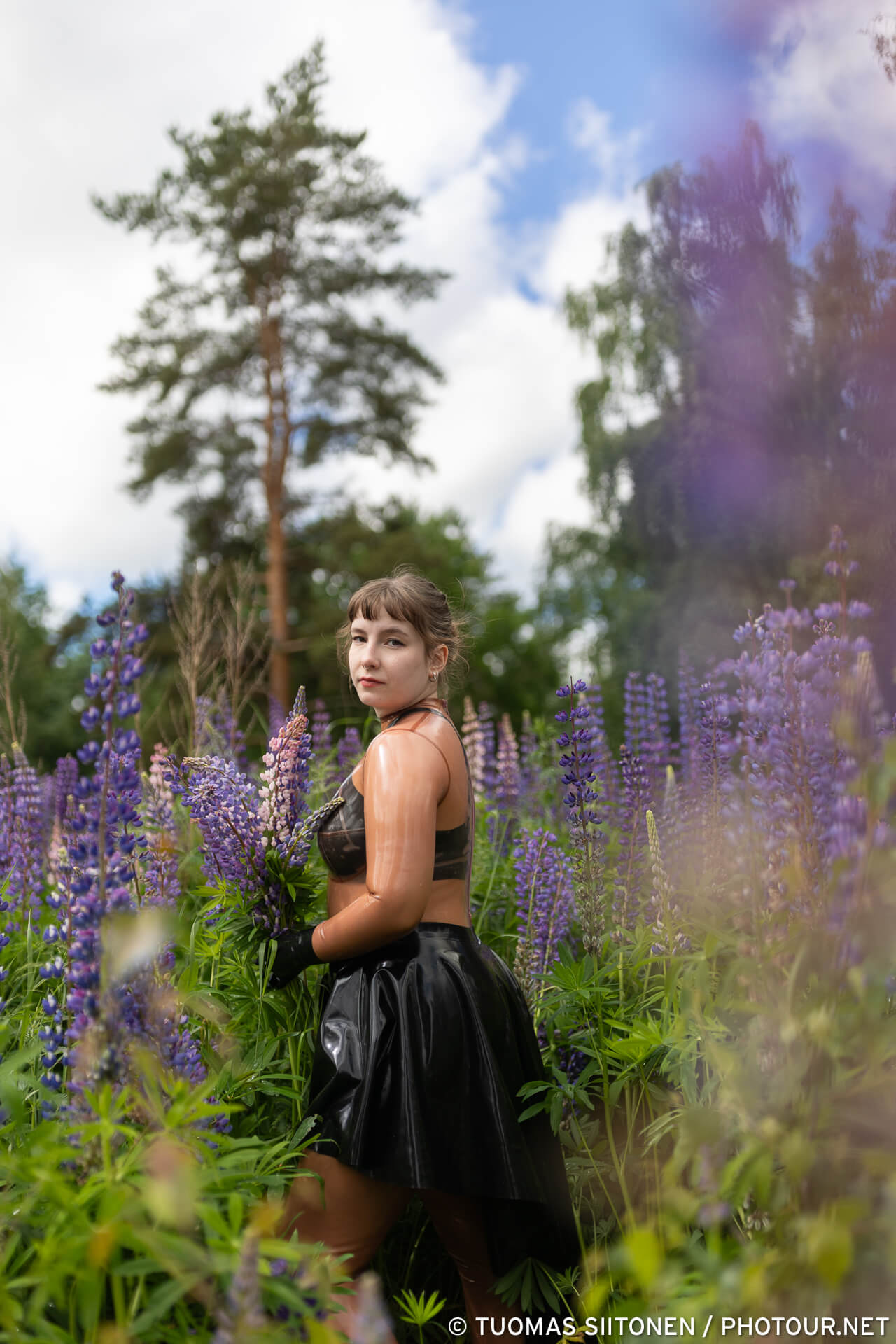
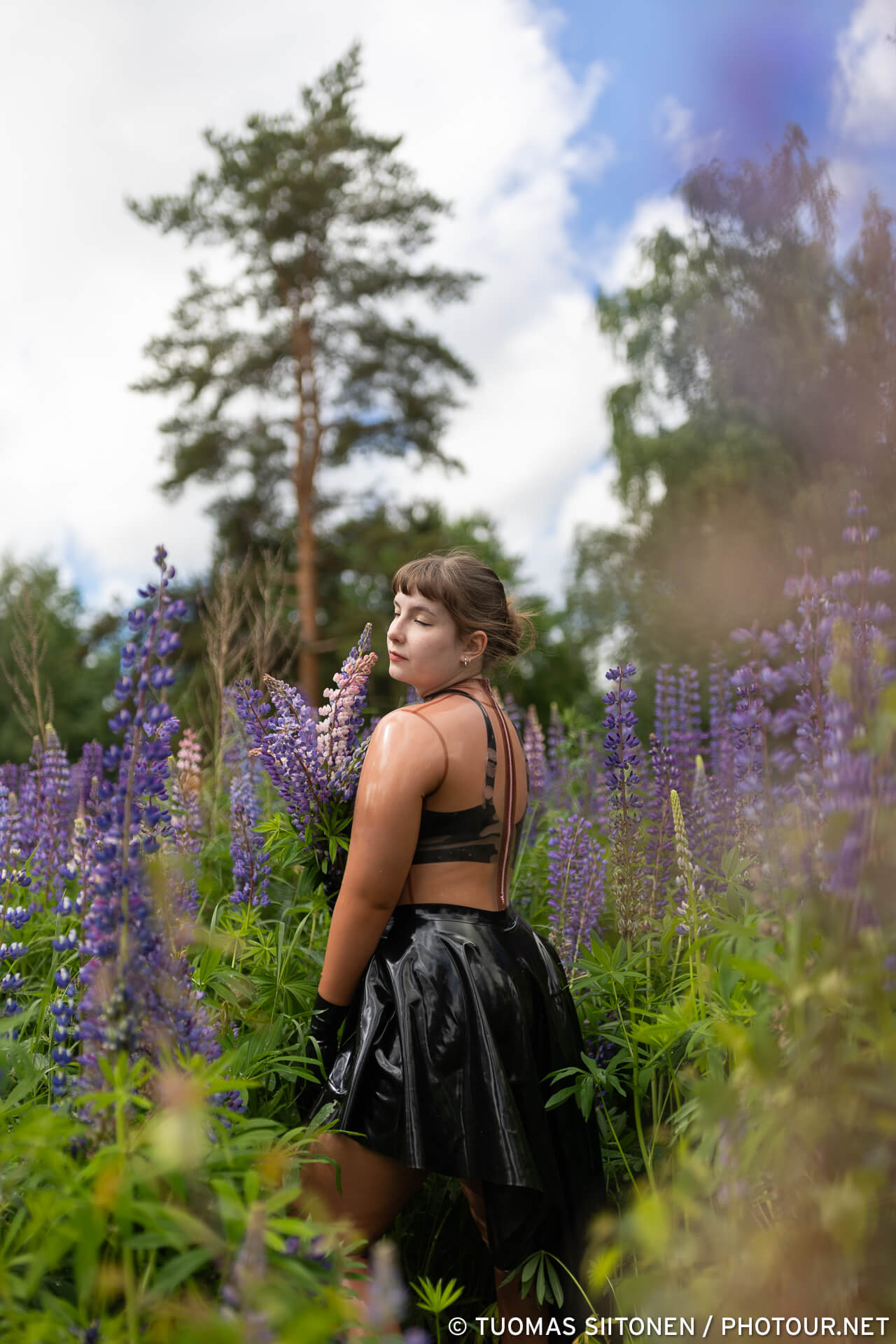
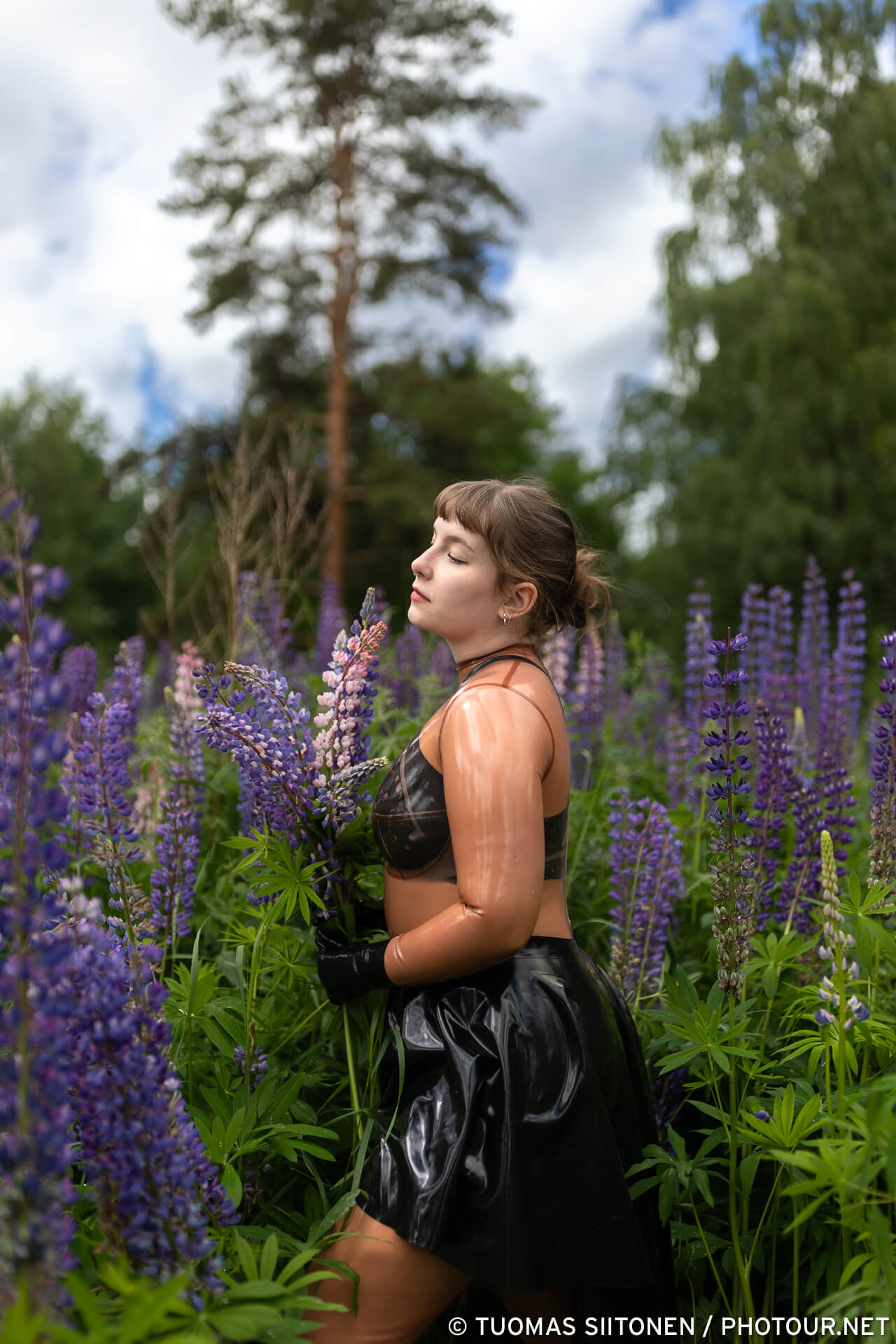
We found a very photogenic location, with a tall pine tree and a spruce creating some lovely framing, in combined with Bunny’s translucent pink outfit. Also some lupines.
I couldn’t decide on which photo to focus on, so I just decided to plaster them all below in a series of nine. Does this kind of mass of photos take away from the majestic feeling of having just one or two?
Probably.
But is it more latex photos and more latex content?
Yes.
We spent the rest of the shoot looking for Himalayan balsams and rugosa roses, which are also invasive plants in the Finnish nature, but failed to find any.
This was a slight disappointment to us; the CrowdSorsa app had reports of them being there, but the plants had been mowed to the ground and removed altogether – but it was great for local nature and the nature project.
The system works!
–
Translucent pink made-to-measure catsuit by Bright & Shiny